← Back to recipes
Anti-Inflammatory

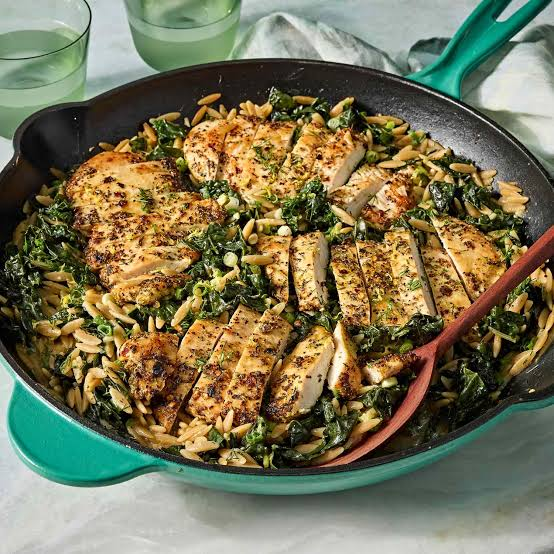
Anti-Inflammatory High-Protein Dill Chicken Orzo

Turmeric-seasoned chicken with creamy whole-wheat orzo, spinach, Greek yogurt and plenty of fresh dill — about 40 g protein per serving.

Serves 4 Prep 10 min Cook 25 min Total 35 min
Anti-Inflammatory High-Protein Dill Chicken Orzo in a skillet

👨‍🍳 Instructions

  1. Season the chicken: Toss chicken with turmeric, oregano, garlic powder, paprika, black pepper, and salt.
  2. Brown the chicken: Heat olive oil in a large deep skillet over medium-high heat. Add chicken and cook for 5–6 minutes, stirring occasionally, until golden and cooked through. Transfer to a plate.
  3. Sauté the aromatics: Reduce heat to medium. Add onion and cook for 2–3 minutes. Add minced garlic and cook for another 30 seconds.
  4. Toast the orzo: Stir in the orzo and cook for about 1 minute, allowing it to lightly toast.
  5. Cook the orzo: Pour in the chicken broth. Bring to a gentle simmer and cook for 8–10 minutes, stirring occasionally so the orzo doesn't stick.
  6. Add vegetables: Stir in cherry tomatoes and spinach. Cook for another 2–3 minutes until the spinach wilts and the orzo is tender.
  7. Make it creamy: Remove the skillet from the heat. Let it cool for about 1 minute, then gently stir in Greek yogurt and feta.
  8. Return the chicken: Add the cooked chicken back to the skillet and stir everything together.
  9. Add the fresh flavors: Stir in lemon juice, lemon zest, fresh dill, parsley, and the remaining olive oil.
  10. Serve: Garnish with extra dill, parsley, feta, and a lemon wedge.

🌿 Why It's Anti-Inflammatory

This recipe combines turmeric, garlic, extra-virgin olive oil, spinach, tomatoes, fresh dill, parsley, and lemon with lean chicken and Greek yogurt for a protein-rich Mediterranean-inspired meal.

High-Protein Tips For even more protein: use Greek yogurt with 15–20 g protein per serving, add ½ cup chickpeas, use chicken breast rather than thighs, or choose whole-wheat / protein-enriched orzo. Tip: If the orzo becomes too thick, add a splash of warm chicken broth until you reach your preferred creamy consistency.

🍋 Recipe Editor's Notes

Recipe focus: This page is built to help a home cook understand not only what to do, but why the sequence matters. The ingredients and method above are the starting point; the notes below highlight practical decisions that can change the final result.

Why this recipe works: The main strength of Anti-Inflammatory High-Protein Dill Chicken Orzo is the contrast between a well-seasoned protein and its fresh or vegetable-based accompaniments. Ingredients such as Chicken & Orzo, 1½ lb (680 g) boneless, skinless chicken breast, cut into bite-size pieces, 1 tbsp extra-virgin olive oil help build the flavor profile while the cooking method keeps the main ingredient from becoming dry.

Technique to watch: Bring the protein close to an even thickness when practical and season it consistently. Cook until safely done rather than relying only on color, then allow it to rest briefly before slicing or serving. This helps retain moisture and makes the final texture more even.

Finishing decision: Finish with the acidic ingredient gradually. Acidity is easiest to control at the end, and a small amount can brighten a dish without making it taste sharply sour.

Smart substitutions

If an ingredient needs to be replaced, choose a substitute with a similar cooking time, moisture level, and texture. Change one ingredient at a time when possible so the balance of the original recipe remains easy to judge.

Make-ahead and storage

Cool leftovers promptly and refrigerate them in a covered container. Reheat gently with a small splash of water or broth if the dish has thickened, and refresh with herbs or a little acidity if the recipe calls for them.

Serving perspective

Serve it as the recipe describes, then build the plate around contrast: something fresh or acidic, something crisp, or a simple vegetable side can make the meal feel more complete without adding unnecessary complexity.

Kitchen reminder: Ingredient brands, pan sizes, heat levels, and produce moisture vary. Use the stated times as a guide and rely on texture, aroma, and safe cooking temperatures when deciding when a dish is ready.